University of Newcastle coursework
Tactile music puzzle
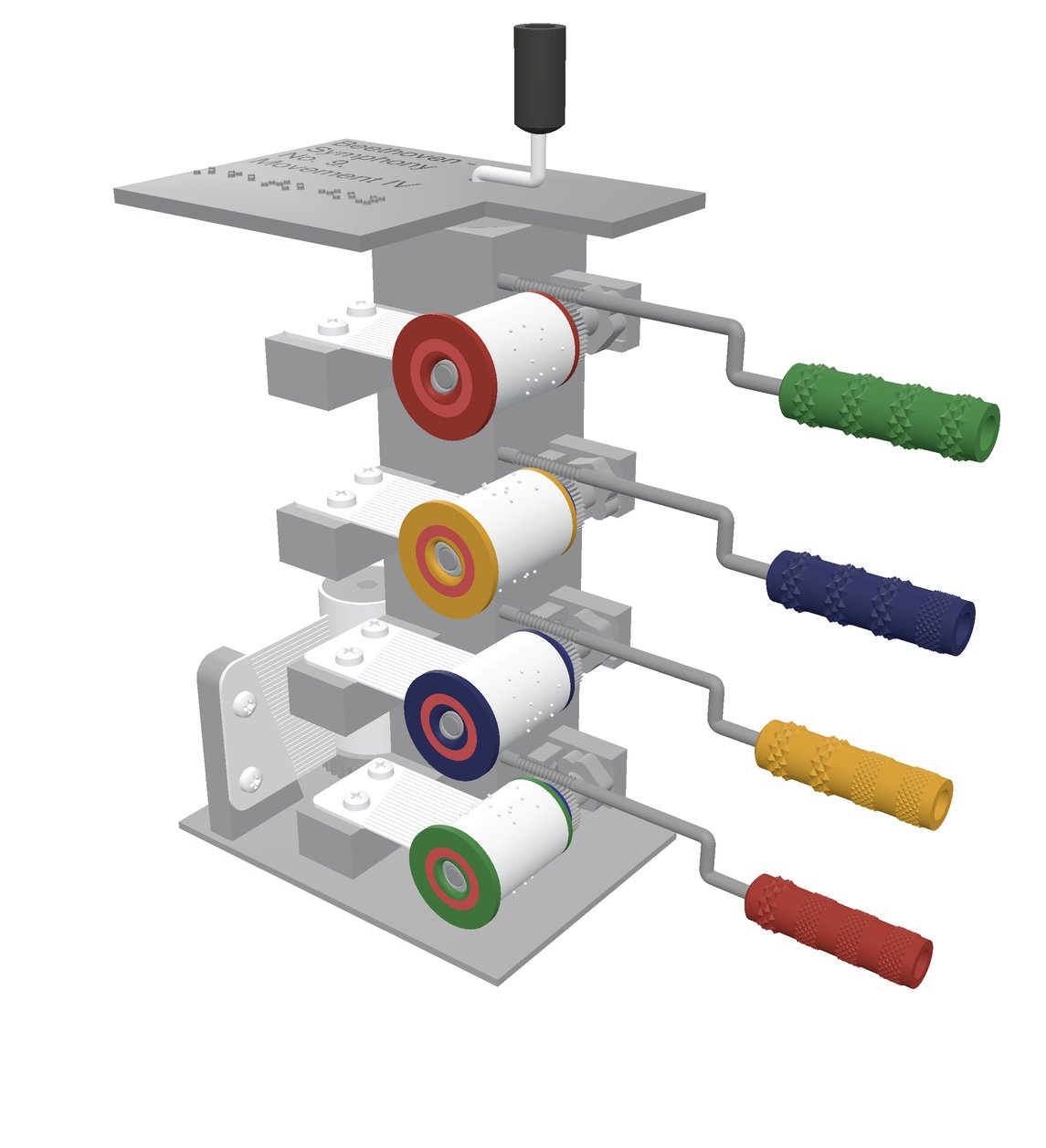
Designed a 3D puzzle that a visually impaired user could solve more easily than a sighted one, and produced a walkthrough video. The brief called for at least four separable components and multiple valid solutions within a 200 × 200 × 200 mm volume.
What I did
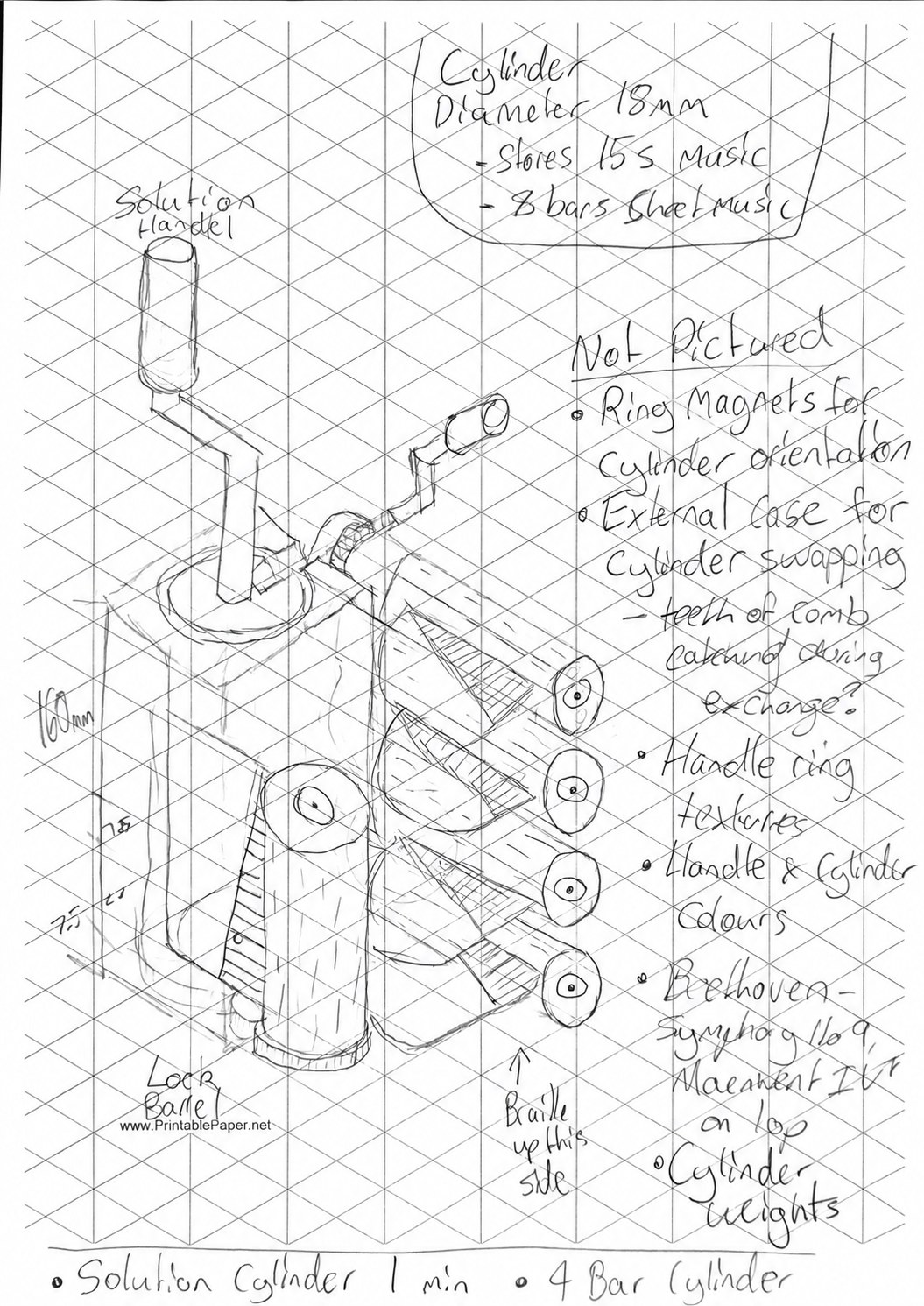
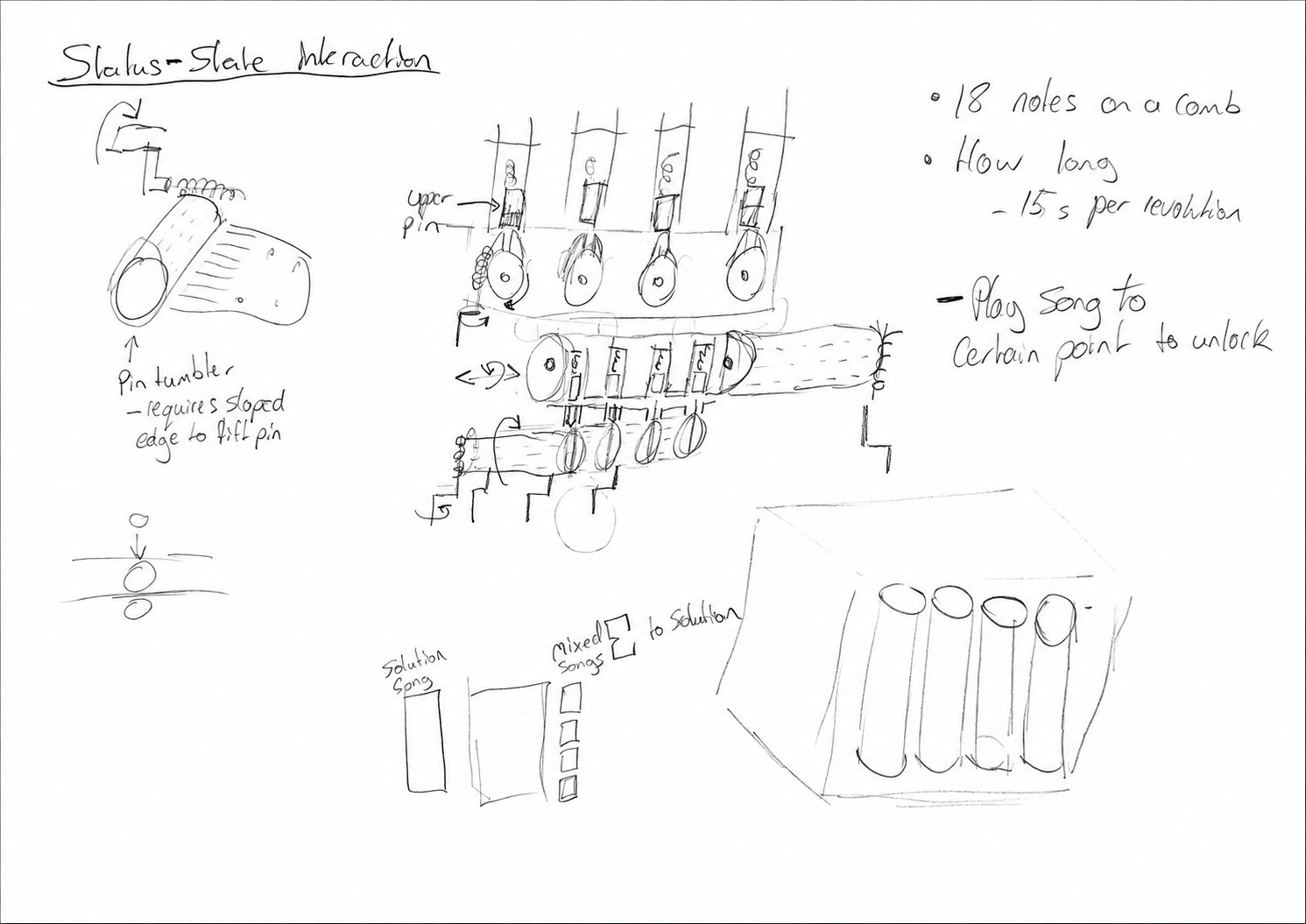
- Designed four interchangeable music cylinders encoded with sections of Beethoven’s “Ode to Joy”.
- When all four cylinders were placed in the correct order, the puzzle played the entire song.
- Two cylinders played the same repeated bars, as in the sheet music, so more than one arrangement was a valid solution.
- Designed the puzzle so that sight was a distraction while touch and sound gave dependable information. The cylinder order was revealed by:
- Coarse-textured bands on the handles, deliberately miscoloured.
- Embedded weights in the cylinders, the heaviest on the bottom axle.
- Braille reading “Ode to Joy”, while the printed text used the formal, less familiar title.
- The music itself.
- Explored accessibility as an information-design problem using:
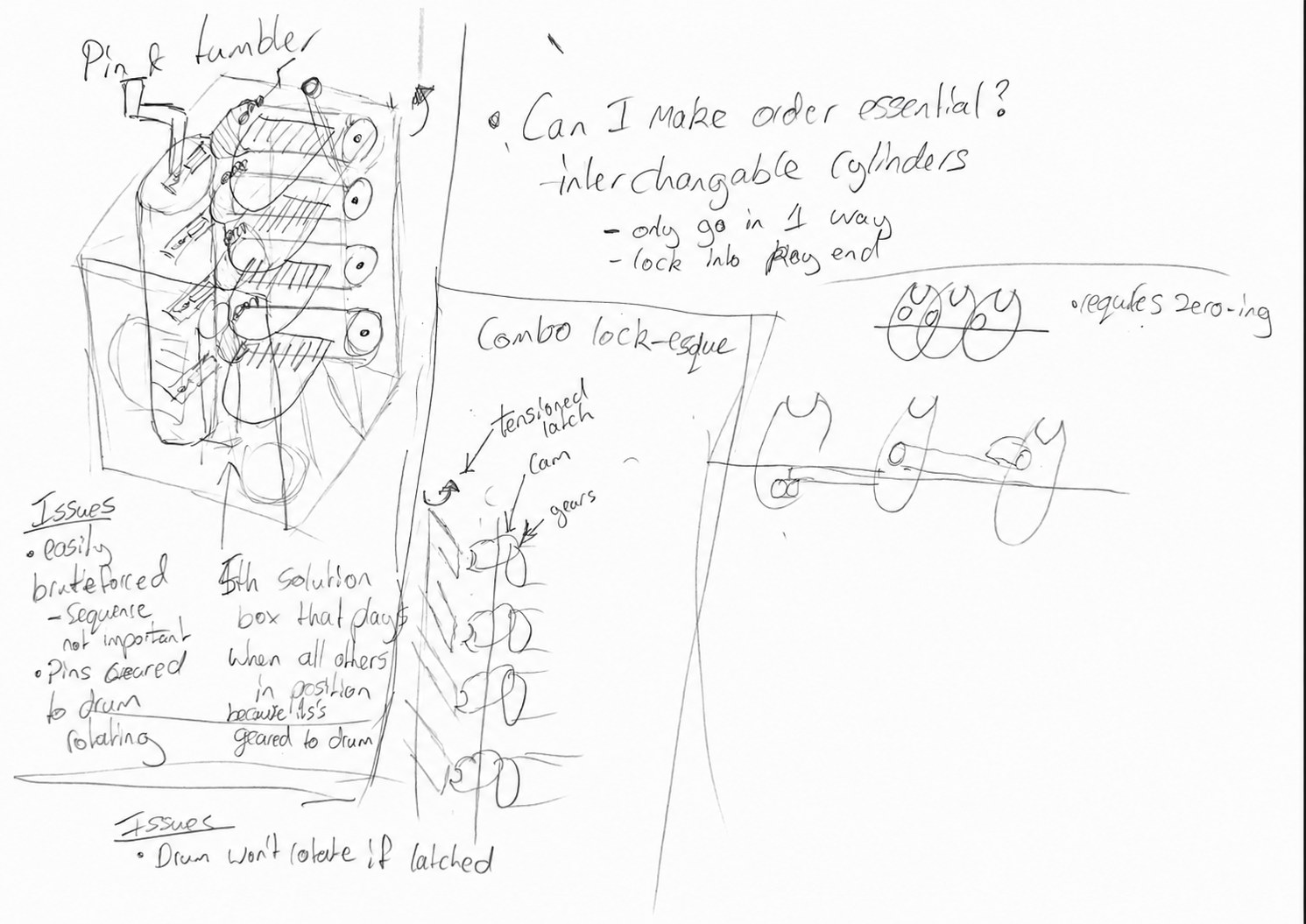
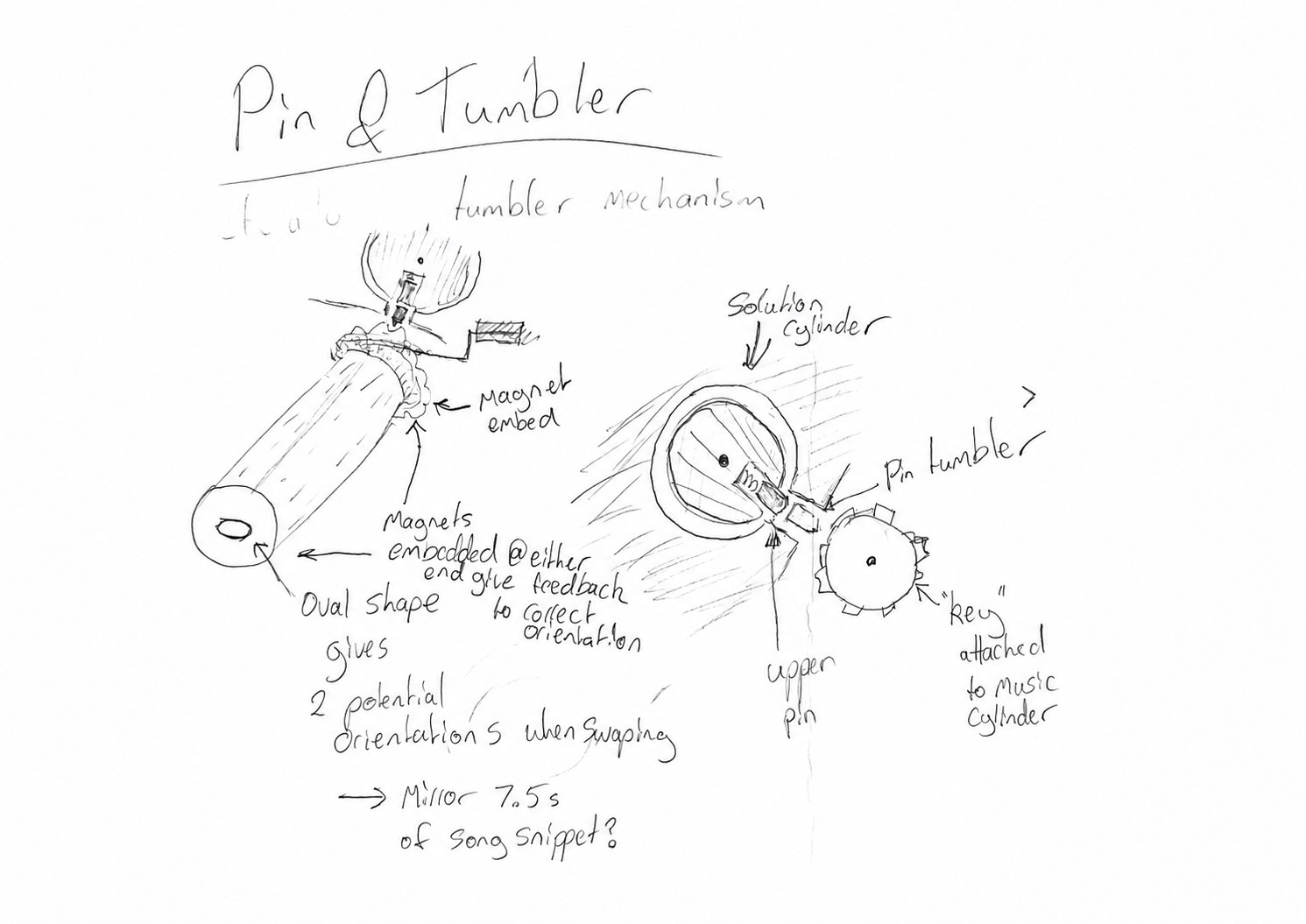
- Orientation magnets at the cylinder ends, so each cylinder could go in only one way.
- Oval axles that set the rotational orientation on insertion, so the steel comb could not damage the raised points.
Design
Model
